
A power outage in Southwest Virginia can range from a minor inconvenience to a serious emergency. When the lights go out, our first concern is often for our comfort. When the outage stretches from hours into days, that concern turns to safety and property. The silence of a home without power is unsettling. The refrigerator stops humming, the Wi-Fi disappears, and most critically, the HVAC system goes dark. In the depths of a Lebanon winter, a home without heat is not just uncomfortable; it is dangerous. In the heat of summer, a home without air conditioning can be equally unbearable.
This is the moment every homeowner asks the same questions. How can I protect my family? How can I keep my heat on, my pipes from freezing, and my food from spoiling? This line of thinking inevitably leads to one solution: a generator. The question that follows seems simple, “Can I get a generator that just powers my whole house?” The answer is a definitive yes, but it is not a simple purchase. It is a calculated engineering decision. Powering an entire home is absolutely possible, but it requires the right type of generator, precise sizing, and professional installation.
Understanding Your Home’s Power Needs
Before you can even consider a generator, you must first understand what your home is asking for. Every single electrical device in your house, from a tiny phone charger to your powerful heat pump, has a specific power requirement. This requirement is measured in watts. There are two different types of wattage, and this distinction is the most important concept in generator sizing.
The first is “running watts.” This is the continuous, steady amount of power an appliance needs to operate. A 100 watt light bulb needs 100 running watts. A refrigerator might need 800 running watts. The second, and more critical, number is “starting watts” or “surge watts.” Many appliances with motors, such as refrigerators, air conditioners, heat pumps, and well pumps, require a massive, brief jolt of extra power just to get started. This starting wattage can be three to five times higher than the running wattage.
Your HVAC system is the perfect example. A heat pump might require 5,000 running watts, but it could demand 15,000 watts or more for the few seconds the compressor needs to kick on. This is the single biggest hurdle in powering a home. You cannot simply add up the running watts of your appliances. A generator must be sized to handle the absolute peak demand, which is the sum of all running watts plus the largest starting wattage load at any given time. If your generator cannot meet that surge, it will overload and shut down, or it will fail to start the appliance at all.
The Two Main Types of Generators
The term “generator” covers two vastly different categories of machines, and this is where most of the confusion begins. One is designed for temporary, essential use, while the other is a permanent solution for seamless power.
The first type is the portable generator. This is the machine most people picture. It is a gasoline powered engine on a frame, often with wheels, and a set of outlets directly on the unit. These are designed for camping, construction sites, and temporary emergency power. To use one, you must place it at least 20 feet away from your home to prevent deadly carbon monoxide poisoning. You then run heavy duty extension cords through a door or window to plug in essential items like a refrigerator or a few lamps. A portable generator cannot power an entire house. It is not designed to. It cannot safely or effectively power hardwired items like your furnace, well pump, or central air conditioner.
Want to upgrade and get a good generator? Click here to see our generator installation service.
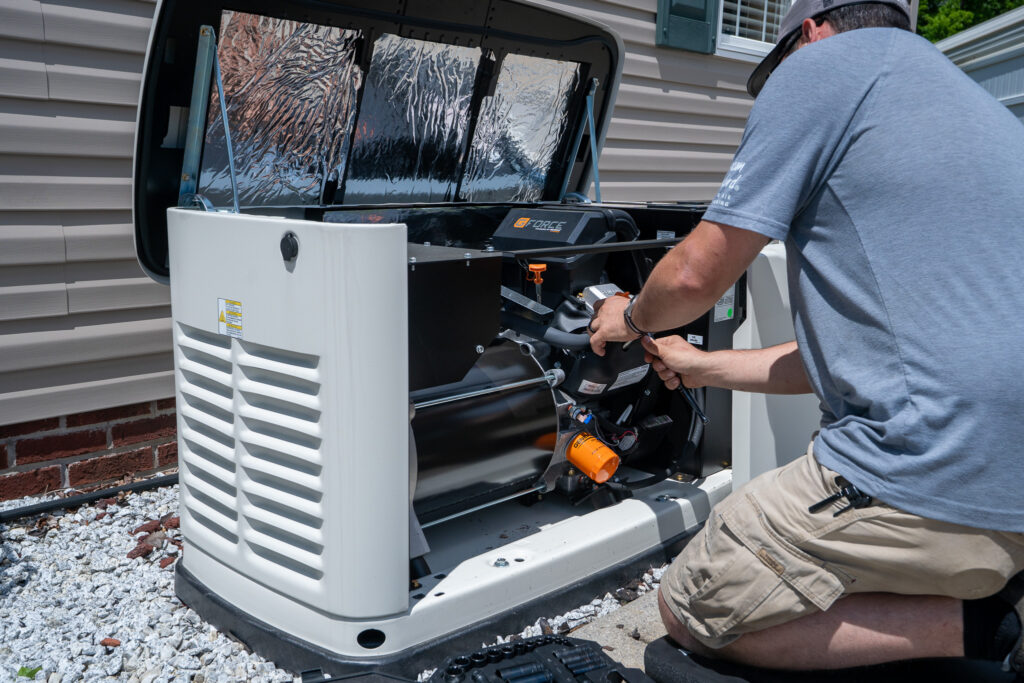
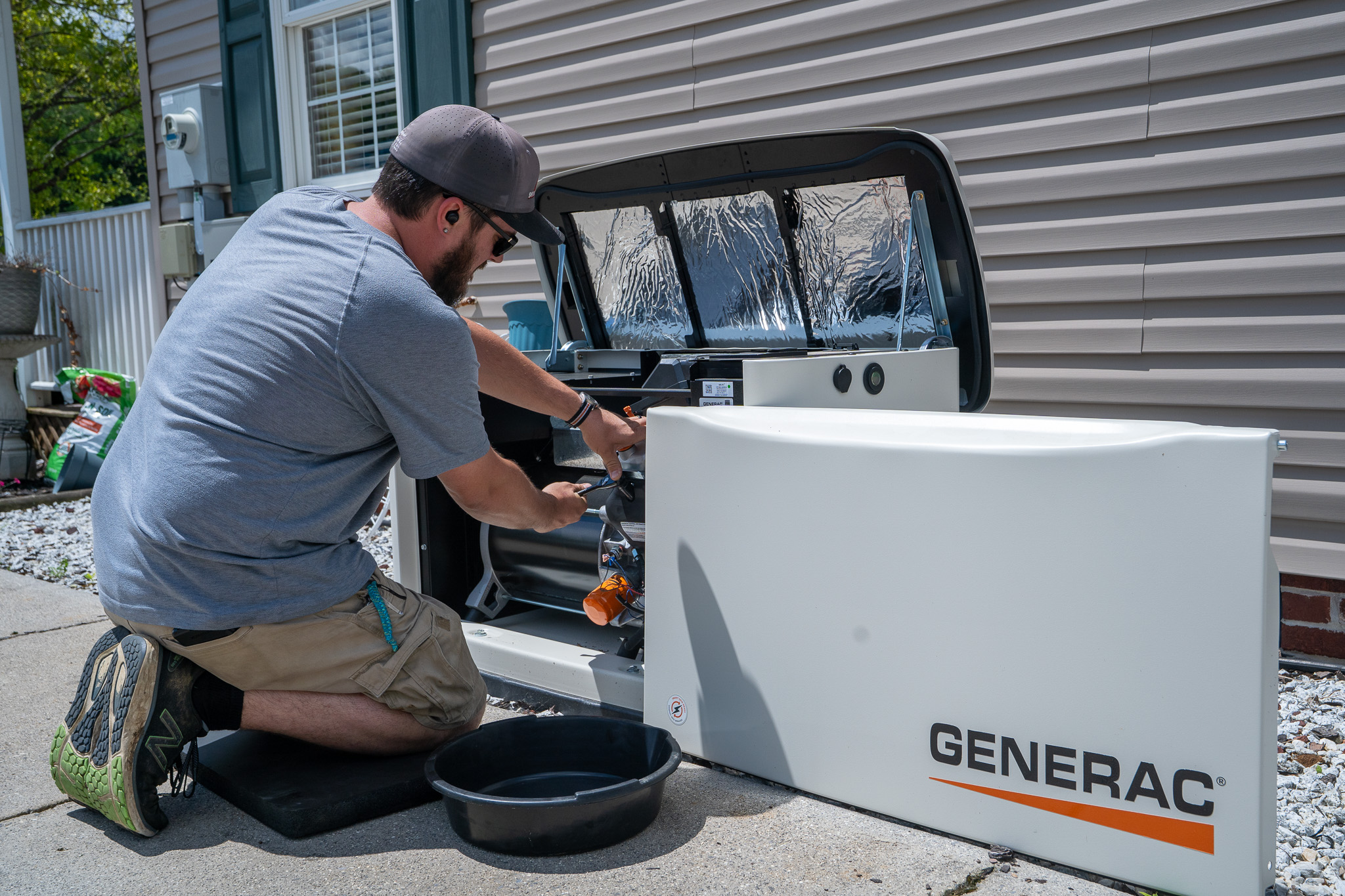
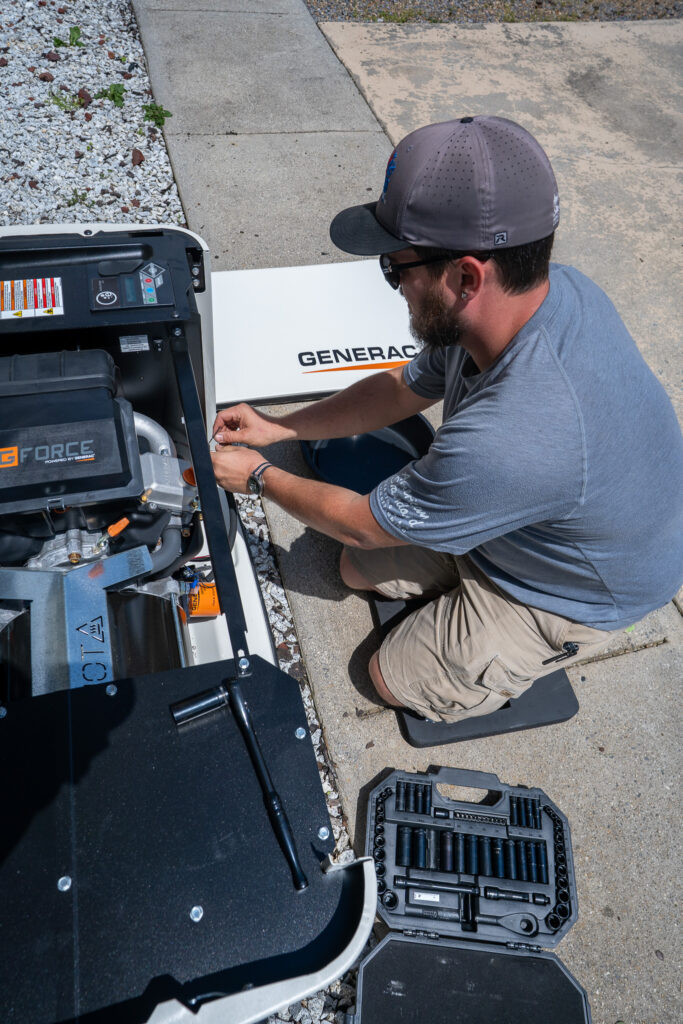
The second type is the home standby generator. This is the machine that can power your entire house. A home standby generator is a permanent installation, similar in appearance to an outdoor air conditioning unit. It sits on a concrete pad outside your home and is permanently connected to your home’s electrical panel. It is also connected to a stable fuel source, typically natural gas or a large propane tank. Unlike a portable unit, you do not have to set it up, refuel it every few hours, or run extension cords. It is an automated, integrated part of your home’s infrastructure.
The Critical Role of the Transfer Switch
You cannot simply plug a generator into a wall outlet. This practice, known as back-feeding, is incredibly dangerous and often illegal. It sends electrical power back down the utility lines, which can electrocute a lineworker who is trying to restore your neighborhood’s power. To safely connect any generator to your home’s wiring, you must use a transfer switch.
A transfer switch is a panel that safely disconnects your home’s electrical system from the utility grid before it connects it to the generator. This makes it impossible for the two power sources to ever be connected at the same time, protecting your appliances and the utility workers.
With portable generators, a manual transfer switch is sometimes used. This involves a subpanel with switches for a few essential circuits. During an outage, you would start your portable generator, then go to the panel and manually flip a switch to move those circuits from “grid” power to “generator” power.
Home standby generators, however, use an automatic transfer switch, or ATS. This is the key to a truly seamless experience. The ATS is an intelligent device that constantly monitors the power coming from the grid. The instant it detects an outage, it automatically disconnects your home from the grid. It then signals the home standby generator to start itself. Within about 10 to 30 seconds, the generator is at full speed, and the ATS automatically switches your home’s power over to the generator. You do not have to do anything. The heat stays on, the lights come back, and your home continues to run as if nothing happened. When the grid power is restored, the ATS detects it, switches your home back to the grid, and tells the generator to shut down.
Sizing Your Generator: Essentials vs. Whole Home
This brings us back to the original question. The “yes, it can” answer depends entirely on sizing. Home standby generators come in a wide range of capacities, and they are generally sized in one of two ways: to power essential loads or to power the whole home.
Need clarity on financing for a generator? Click here for more information.
An “essential load” or “selected circuit” generator is the most common choice. These are smaller, more affordable standby generators. During installation, you and your technician decide which circuits are non-negotiable. This almost always includes the furnace or heat pump, the refrigerator, the well pump if you have one, and key lighting and outlet circuits. The automatic transfer switch is wired to these circuits only. When the power goes out, your essentials are powered, but your non-essential circuits, like your electric oven, hot tub, or clothes dryer, remain off. This is an excellent solution that provides safety and core comfort.
A true “whole home” generator is the premium solution. This is a much larger, more powerful, and more expensive unit. It is sized to handle your entire electrical panel, just as if the grid was still on. This means that when the power goes out, your home functions with zero compromises. You can run your HVAC system, cook a meal on your electric stove, do a load of laundry, and watch television all at the same time. The automatic transfer switch moves the entire 200 amp or 400 amp service, not just a few circuits. This is the ultimate in peace of mind and convenience.
Why Your HVAC System is the Biggest Factor
For any homeowner in our region, the single most important consideration when sizing a generator is the HVAC system. This is where SWVA Mechanical’s expertise becomes crucial. Your heating and cooling system is the largest and most complex electrical load in your home.
If you have a gas or oil furnace, your electrical needs are relatively modest. The generator only needs to power the electronic controls, the igniter, and the blower motor. This is a very manageable load.
If you have a heat pump or central air conditioning, the story is completely different. The compressor in your outdoor unit has an enormous starting wattage, also known as Locked Rotor Amps (LRA). A generator must be able to supply this massive surge of power instantaneously. Undersizing a generator, even by a small amount, will mean your heat pump or AC will fail to start, rendering the generator useless for climate control. Many modern, high-efficiency generators have sophisticated power management technology designed to handle these large motor loads, but it must be sized correctly.
Even commercial refrigeration, like walk-in coolers, has the same challenge. The compressor systems require a massive surge to start. A generator that is not sized for this specific load will fail, leading to thousands of dollars in spoiled inventory. This is why a simple online “wattage calculator” is not enough. You need a professional to perform a true load calculation, taking into account the exact specifications of your HVAC and refrigeration equipment.
So, can a generator power an entire house? Absolutely. A permanently installed home standby generator, when professionally sized and paired with an automatic transfer switch, can seamlessly run your entire home, including your heat pump, furnace, and all your appliances.
The real question is not “can it,” but “what do you need it to do?” Do you want to protect your family and property with just the essentials, ensuring your heat stays on and your pipes do not freeze? Or do you want to live with zero interruptions, with the power and convenience to run your entire home as if the grid never failed?
Both are possible. The key is to move away from the idea of a portable, gas-can-fueled machine and toward a permanent, automated solution. The decision starts with understanding your needs, and it must involve a professional who understands the immense power requirements of modern HVAC systems. Do not guess at your wattage. A generator is a major investment in your home’s safety and reliability. A professional load calculation and installation is the only way to ensure that when the power goes out, your generator is truly ready to handle the load.