
Walking into your home on a hot Virginia day should feel like stepping into a cool, dry oasis. Instead, you find sticky air, foggy windows, and that heavy feeling that makes everything uncomfortable. Your air conditioner seems to be running just fine, pushing out cold air from every vent. So why does the humidity stick around like an unwelcome guest? The answer lies in how your air conditioning system handles moisture removal, and the causes are often simpler than you might think.
How Your Air Conditioner Controls Humidity in Your Home
Your air conditioner does more than just cool the air in your home; it also pulls moisture out of it. When warm, humid air passes over the cold evaporator coil, water condenses on the coil surface and drains away through the condensate line. This process removes gallons of water from your indoor air every day during humid weather. A properly sized and functioning system should keep indoor humidity between 30 and 50 percent. When humidity climbs above that range, something in the dehumidification process has broken down. Understanding the mechanics helps you spot the problem faster and get comfortable again.
The Air Conditioner Dehumidification Process Explained
Every central air conditioning system pulls double duty in the summer months. The evaporator coil inside your indoor unit gets very cold when refrigerant flows through it, and warm household air blows across those cold coils. Moisture in the air condenses on the coil surface, much like water beads forming on a cold glass of sweet tea. That condensed water drips into a pan below the coil and flows outside through a drain line. This continuous cycle strips humidity from your home while the cooling cycle runs.
The amount of moisture removed depends on how long the system runs during each cooling cycle. Short cycles do not give the coil enough time to pull significant water out of the air. Longer, steadier cycles remove far more humidity because the coil stays cold and wet for an extended period. This is why an oversized air conditioner often struggles with humidity even though it cools the space quickly. The system satisfies the thermostat before it ever gets a chance to dry out the air properly.
Proper airflow across the coil also matters for good dehumidification. A clogged air filter, dirty blower wheel, or blocked return vent all reduce airflow and hurt moisture removal. The coil temperature and the air volume passing over it must stay in balance for condensation to form efficiently. When that balance falls apart, your home feels damp even when the thermostat reads 72 degrees. Regular maintenance keeps every part of this process working as designed.
Signs Your Air Conditioner Is Not Removing Enough Humidity
Sticky skin and clammy air are the most obvious clues that humidity levels have climbed too high indoors. You might notice that your clothes feel slightly damp, or that towels in the bathroom take forever to dry. Wood floors can feel tacky underfoot, and furniture upholstery may smell musty after a few humid days. These physical sensations often show up before any instrument confirms the problem. Trust what your senses tell you; the house should feel crisp and refreshing, not heavy.
Condensation on windows, especially in the early morning, points to excess indoor moisture. You may also see water droplets forming on cold water pipes, toilet tanks, or metal fixtures. Mold or mildew growth in bathrooms, around window frames, or behind furniture signals a long-running humidity issue. A musty smell throughout the home is another warning sign that moisture has settled into carpets, drywall, or insulation. Catching these clues early prevents expensive damage to your home and belongings.
A simple hygrometer from any hardware store can confirm your suspicions with a concrete reading. Place one in your main living area and watch the numbers over a few days. Readings consistently above 55 percent mean your air conditioner is not keeping up with moisture removal. You should also pay attention to how often your system cycles on and off throughout the day. Very short cycles, sometimes called short cycling, almost always lead to humidity problems even in a cool room.
Common Reasons Your Air Conditioner Fails at Humidity Control
An oversized air conditioner is one of the top reasons homes stay humid despite cold air pouring from the vents. A unit with too much capacity cools the air so quickly that it shuts off before the coil can remove much moisture. Contractors sometimes install larger equipment thinking bigger is better, but that approach backfires on comfort. Proper load calculations based on square footage, insulation, and window exposure prevent this mistake. If your system was replaced without a full load calculation, oversizing could be the root cause.
Dirty evaporator coils lose their ability to condense water efficiently. Dust and grime coat the fins and act like an insulating blanket between the cold refrigerant and the passing air. The coil cannot get cold enough to pull water vapor out of the air stream. Low refrigerant levels cause a similar problem because the coil runs warmer than it should. Both issues often show up together after years of skipped maintenance visits.
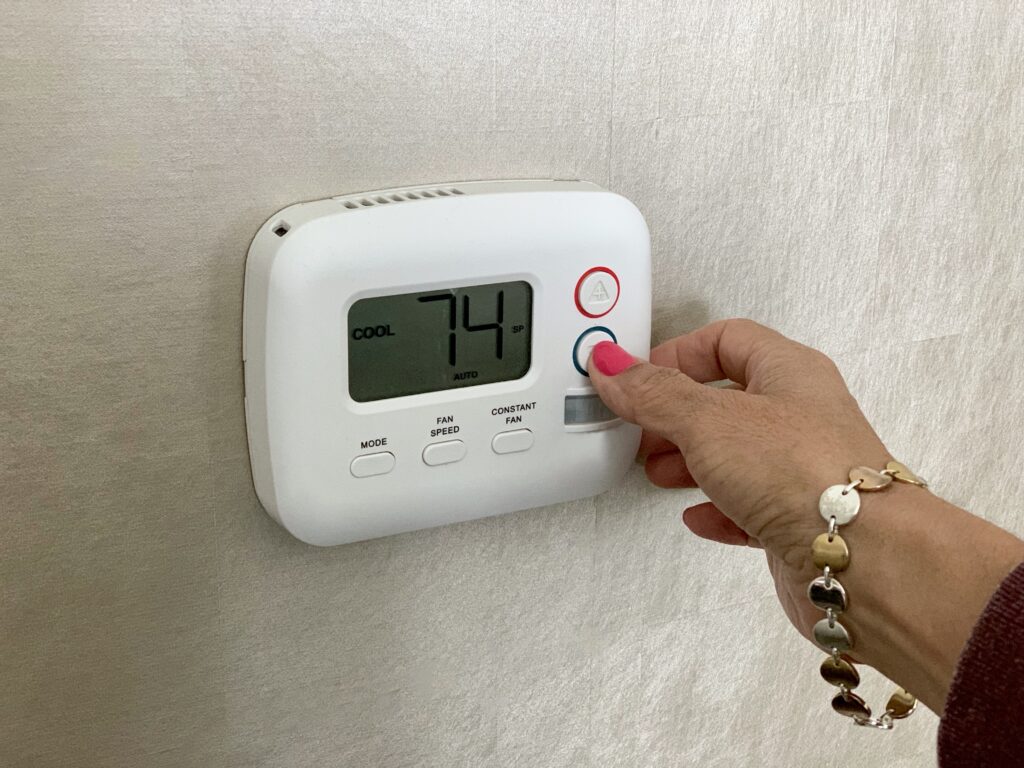
A stuck thermostat fan setting also prevents proper dehumidification in many homes. When the fan runs continuously while the compressor cycles off, water that just condensed on the coil evaporates right back into your home. Set the fan to AUTO so it only runs during active cooling cycles. Leaky return ducts pulling in humid attic or crawlspace air create another hidden source of moisture. Sealing those ducts and setting the fan correctly can restore comfort without any new equipment.
Need air conditioning repair? Click here for our air conditioning repair service.
Outside Sources of Humidity That Overwhelm Your Air Conditioner
Sometimes the air conditioner is doing its job, but too much moisture is entering the home from outside sources. Southwest Virginia summers bring warm, humid air that finds every gap and crack in a home’s envelope. Your AC simply cannot keep up when the moisture load exceeds its designed capacity. Identifying and blocking these moisture sources makes your system far more effective. A tight, well-sealed home gives your air conditioner a fighting chance against humid weather.
Air Leaks Bringing Humidity Into Your Home
Gaps around doors, windows, and exterior penetrations let humid outdoor air seep inside all day long. Weatherstripping wears out over time, and caulk cracks and separates from surfaces after a few seasons in the sun. Electrical outlets on exterior walls often act like small chimneys, pulling in damp air from the wall cavity. Recessed lights in ceilings under attics do the same thing in reverse, letting humid attic air fall into living spaces. Every one of these small leaks adds up to a significant moisture load for your air conditioner to handle.
Attic hatches and pull-down stair ladders are notorious for leaking humid air into conditioned spaces. Most attics in Virginia hit temperatures above 120 degrees in summer and hold very humid air. An uninsulated attic hatch acts like an open window to that muggy attic environment. Weatherstripped covers and rigid foam insulation on the attic side seal off this major source of moisture infiltration. The same goes for whole-house fans, which should have insulated covers installed during cooling season.
Crawlspaces under homes are another major source of humidity migration indoors. Moist earth, plumbing leaks, and poor drainage all add moisture that rises through the floor into your living space. Encapsulating the crawlspace with a heavy vapor barrier dramatically reduces this problem. Sealing rim joists and installing a dehumidifier in the crawlspace takes it a step further. Many Southwest Virginia homes see indoor humidity drop 10 percentage points or more after proper crawlspace work.
Duct Leaks Reducing Air Conditioner Humidity Control
Supply ducts running through attics and crawlspaces lose cooled, dehumidified air before it reaches your rooms. That lost conditioned air creates negative pressure inside the living space, which pulls humid outside air in through every available gap. You pay to dehumidify air that never reaches you, and then you pay again to handle the humid replacement air. Duct leakage of 20 to 30 percent is common in older homes with unsealed ductwork. Even newer homes often have leaks at connections, boots, and plenum seams.
Return duct leaks cause even bigger humidity problems than supply leaks. A leaky return in the attic sucks in hot, humid air and mixes it with the cooler return air from your home. Your air conditioner then has to work harder, and the extra moisture overwhelms the coil’s dehumidification capacity. The system runs longer but still cannot catch up with the steady stream of outside moisture. Sealing returns is one of the highest-impact repairs for humidity control in older homes.
Professional duct sealing with mastic or aerosol sealants stops these leaks and restores the system’s ability to dry out your home. A technician with a duct blaster can measure leakage before and after the repair to verify results. Insulating the ductwork afterward prevents condensation on the outside of cold supply ducts in humid spaces. Well-sealed and insulated ducts deliver the full cooling and dehumidification capacity of your equipment. This work often pays for itself in lower energy bills and much better comfort.
Daily Activities That Add Moisture to Indoor Air
Cooking, showering, and laundry all add significant moisture to the air inside your home. A single hot shower can release a pint of water vapor into the air in just a few minutes. Boiling pasta, simmering soup, or running the dishwasher puts even more moisture into the kitchen air. These sources add up quickly, especially in homes where bathroom and kitchen exhaust fans are missing or never get used. Running those fans during and after moisture-producing activities vents the water vapor outside where it belongs.
Indoor plants, fish tanks, and even the simple act of breathing contribute to indoor humidity levels. A family of four adds several gallons of water to the indoor air every day just from normal living. Firewood stored indoors, wet mops left to dry inside, and hang-drying clothes all add to the moisture load. None of these sources are huge on their own, but together they can push humidity above comfortable levels. Being mindful of moisture sources and venting them properly helps your AC keep up.
New construction or recent renovations can also release moisture for months after the work finishes. Fresh concrete, new drywall, and recently applied paint all release water vapor as they cure. Homes built on damp sites or with poor grading struggle with ongoing moisture migration from the ground. Addressing these underlying issues often requires professional help from an HVAC contractor familiar with local soil and climate conditions. Southwest Virginia’s mountain valleys present unique humidity challenges that benefit from experienced local expertise.
Want to keep your air conditioner working at peak efficiency all summer? Click here for our air conditioning maintenance service.
Why You Need Professional Help With Home Humidity Problems
Trying to solve humidity issues on your own often leads to frustration and wasted money on the wrong fixes. A trained HVAC technician brings the tools, training, and experience needed to find the actual cause. Testing refrigerant levels, measuring airflow, checking duct leakage, and calculating proper system sizing all require professional equipment. SWVA Mechanical has served Southwest Virginia homeowners for years with exactly these kinds of comfort problems. The right diagnosis saves you money and gets your home feeling right again.
Professional Diagnosis of Your Home Humidity Problems
A qualified technician starts with a full visual inspection of your indoor and outdoor equipment. They check refrigerant pressures, measure temperature splits across the coil, and look for signs of airflow restriction. A dirty coil, weak compressor, or undercharged system all show up in these basic measurements. The technician also examines the condensate drain line to make sure water flows out of the system freely. Clogged drains can back up water into the air handler and cause all kinds of humidity issues.
Duct inspections often reveal hidden problems that homeowners cannot see or measure on their own. A technician uses smoke testing, pressure measurements, and visual inspection to find leaks in the ductwork. They also check for proper insulation on ducts running through unconditioned spaces. Return and supply airflow measurements confirm that each room is getting the air it needs. Imbalanced airflow between rooms often leads to humidity complaints in certain parts of the house.
Load calculations and humidity measurements give a complete picture of your home’s comfort performance. The technician compares your equipment’s capacity to the actual heat and moisture load of your home. If the system is oversized or undersized, they can recommend changes to restore proper dehumidification. Sometimes the fix is as simple as a setting change; other times, new equipment or a whole-home dehumidifier makes more sense. Either way, you get clear answers instead of guessing at the problem.
Solutions for Better Home Humidity Control
Repairing the issues a technician finds often solves humidity problems without major expense. Cleaning a dirty coil, sealing ducts, correcting refrigerant charge, and fixing the condensate drain all make a big difference. Thermostat adjustments like switching the fan to AUTO and using a variable-speed blower setting improve moisture removal. These basic repairs often drop indoor humidity by 10 to 15 percentage points and restore comfort. A maintenance visit each spring catches these issues before they ruin your summer.
When the underlying equipment is the wrong size, a replacement with a properly sized system pays off for years. Modern two-stage and variable-speed air conditioners run longer at lower capacity, which dramatically improves dehumidification. They use less energy while keeping humidity right where it belongs. A professional load calculation ensures the new system matches your home’s actual needs. Oversized equipment is almost never the right answer, even in a hot climate.
Whole-home dehumidifiers work alongside your air conditioner to handle extreme humidity loads. These units tie into your existing ductwork and remove moisture independently of the cooling cycle. They are especially useful in homes with basements, crawlspaces, or very humid outdoor conditions. Properly installed, a whole-home dehumidifier keeps humidity between 45 and 50 percent regardless of outdoor weather. That level of control makes the entire home feel cooler even at a higher thermostat setting.

Why Choose SWVA Mechanical for Your Home Comfort Needs
SWVA Mechanical has built its reputation on prompt, professional HVAC service across Southwest Virginia. Our licensed and certified technicians bring decades of industry knowledge to every service call. Each technician on our team is background checked and drug tested, giving you peace of mind when we enter your home. We treat your property with the respect it deserves and leave every job site cleaner than we found it.
As a Gree Select Dealer, we offer twice the standard warranty on qualifying equipment installations. Our locally owned and operated small business takes pride in serving neighbors throughout Lebanon, Abingdon, Bristol, and the surrounding communities. We carry energy-efficient HVAC options that save you real money on monthly utility bills. Financing is available through Wisetack and Synchrony to fit equipment upgrades into any household budget.
Call SWVA Mechanical today at (276) 971-9514 to schedule your humidity diagnosis or air conditioning service. You can also reach out by email at Brian@swvamechanical.com for questions about any of our services. We handle everything from quick repairs to complete system replacements with the same professional care. Stop living with sticky, uncomfortable air in your own home. Let our team bring real comfort back to your house this summer.