
A frozen air conditioner on a hot summer day is one of the most frustrating problems a homeowner can face. You set the thermostat low, expect cold air, and instead get warm breezes or no airflow at all. When you check the outdoor unit, you find the refrigerant line wrapped in a thick layer of ice. This happens more often than people realize, especially during peak summer heat in Southwest Virginia. A frozen AC unit points to a bigger issue underneath the ice, and ignoring it can lead to compressor damage. Knowing the right steps to take can save you money and protect your system from long-term harm.
Why Your AC Freezes Up During Summer Heat
Your air conditioner can freeze up for several reasons, and each one requires a different solution. The core issue is always the same; something is preventing proper heat exchange inside the evaporator coil. When warm air stops flowing over the coil, the refrigerant gets too cold and condensation turns to ice. A frozen AC cannot cool your home because the ice blocks airflow and traps the cold inside the unit. Identifying the root cause quickly helps you avoid expensive repairs down the road. Most causes fall into three main categories, each with its own warning signs and fixes.
Dirty Air Filters Causing Your AC to Freeze Up
A clogged air filter is the most common reason an AC freezes up during hot weather. When the filter is packed with dust, pet hair, and debris, air cannot move through the system properly. The evaporator coil depends on a steady stream of warm indoor air passing over it to keep the refrigerant temperature balanced. Without that airflow, the coil gets too cold and ice starts forming within hours. You might notice weak airflow from vents before the freeze happens, which is an early warning sign. Replacing your filter every 30 to 90 days is the easiest way to prevent this problem.
Homeowners often forget about the filter until something goes wrong with the system. Pets, smoking indoors, and open windows all shorten the lifespan of a standard filter. If you have run the AC for months without checking the filter, pull it out and hold it up to the light. A filter you cannot see through needs to be replaced immediately, not cleaned. Using a high-efficiency filter that restricts too much airflow can also cause freezing, so pick one rated for your specific system. The manufacturer’s manual will tell you the correct MERV rating to use.
After replacing the filter, turn the AC off completely and let the ice melt before running it again. Running a frozen system pushes the compressor to work harder than it should, which shortens its lifespan. Give the unit at least two to three hours to thaw, or longer if the ice buildup is severe. Once the system is fully thawed, turn it back on and watch for proper cold airflow. If the unit freezes again within a day, the filter was not the only issue. At that point, you need a professional diagnosis from a licensed HVAC technician.
Low Refrigerant Levels Making Your AC Freeze Up
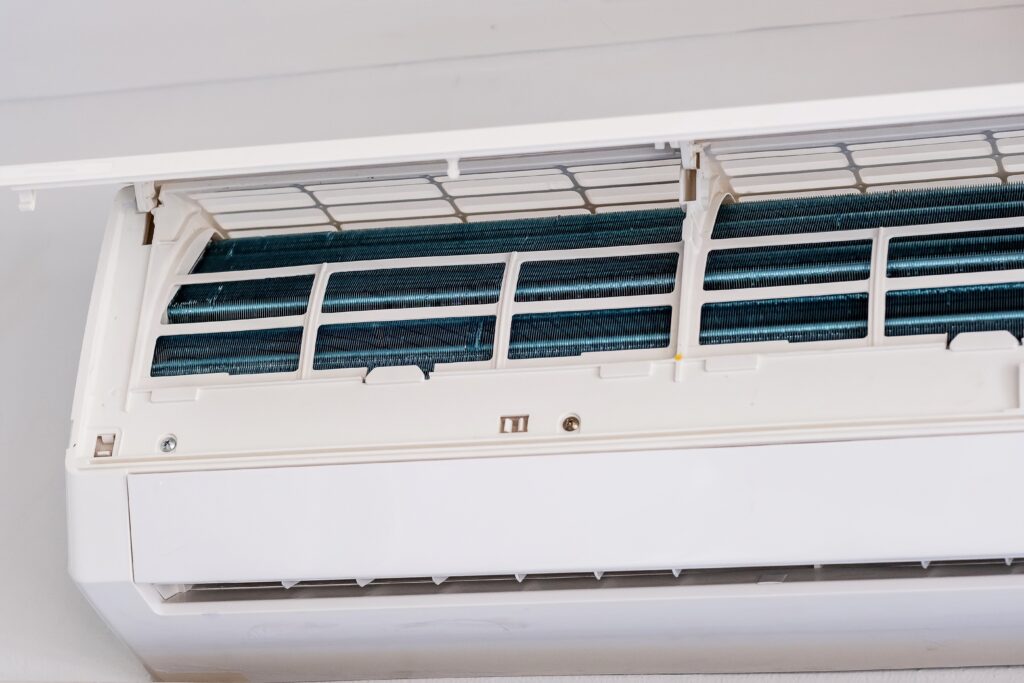
Low refrigerant is the second leading cause of an AC freezing up, and it almost always means there is a leak. Refrigerant is not consumed like fuel; it circulates in a closed loop and should never need topping off. When levels drop, the pressure in the evaporator coil falls below normal, which makes the coil temperature plunge far below freezing. Moisture in the air then condenses on the coil and turns to ice almost instantly. You might hear a hissing sound near the indoor unit or notice oily residue around the refrigerant lines. These are clear signs that professional help is needed right away.
Refrigerant leaks are not a DIY fix under any circumstances. Federal law requires EPA Section 608 certification to handle refrigerants, and the chemicals themselves are harmful if mishandled. A licensed technician uses specialized leak detection tools to find the exact source of the problem. They will repair the leak, pull a vacuum on the system, and recharge it with the correct amount of refrigerant. Simply adding more refrigerant without finding the leak wastes money and harms the environment. Older systems using R-22 refrigerant are especially expensive to recharge because the chemical has been phased out.
Catching a refrigerant leak early can save your compressor from failing. Running an AC with low refrigerant puts extreme strain on the compressor, which is the most expensive component in the entire system. A compressor replacement often costs so much that many homeowners choose to replace the whole unit instead. Need help with a frozen AC or a suspected refrigerant leak? Click here for our air conditioning repair service. Our certified technicians can diagnose the problem quickly and get your system running again before the heat gets worse.
Blocked Return Vents and Ductwork Causing Your AC to Freeze Up
Blocked return vents are another common reason your AC freezes up, and most homeowners overlook this one entirely. Return vents pull warm air from your home back into the system so it can be cooled and recirculated. Furniture, rugs, curtains, and stored boxes often cover these vents without the owner realizing it. When the return airflow drops too low, the evaporator coil does not get enough warm air to stay balanced. Ice forms in the same way it does with a dirty filter, just from a different source. Walk through your home and make sure every return vent has at least two feet of clear space around it.
Ductwork problems can also starve your system of proper airflow. Disconnected ducts in attics or crawl spaces leak conditioned air into unused areas of the home. Crushed or kinked flexible ducts create bottlenecks that limit how much air reaches the evaporator coil. Older homes with undersized ductwork can suffer from this problem year after year without the owner knowing. A professional duct inspection uses pressure testing to find leaks and restrictions throughout the system. Sealing and repairing ductwork often restores proper airflow and prevents future freezing.
Closing too many supply vents throughout the house can also cause freezing issues. Some homeowners close vents in unused rooms to save energy, but this creates pressure imbalances in the system. The AC is designed to push a specific volume of air through the entire duct system at all times. Closing vents forces that air through fewer openings, which can actually reduce the total airflow reaching the evaporator. Keep at least 80 percent of your supply vents open at all times for proper system balance. If you want to control cooling by zone, ask an HVAC professional about installing a proper zoning system.
Immediate Steps to Take When Your AC Freezes Up
Taking quick action when you notice a frozen AC can prevent serious damage to your cooling system. The worst thing you can do is keep running the unit and hope it fixes itself. Ice buildup puts stress on the compressor, fan motor, and other critical components every minute the system runs. Following a simple sequence of steps protects your equipment and gives you the best chance of a quick fix. Some problems you can handle yourself, while others require a professional right away. Knowing the difference between the two can save you from an expensive emergency repair.
Turning Off Your AC to Stop the Freeze Up
The first thing to do when your AC freezes up is turn it off at the thermostat. Set the system to OFF, not just a higher temperature, because the compressor needs to stop completely. Running a frozen system even for a few more minutes can damage the compressor beyond repair. Next, switch the fan setting from AUTO to ON, which will blow warm indoor air over the frozen coil. This speeds up the thawing process significantly compared to letting the ice melt on its own. A fully iced-over system can take anywhere from two to twenty-four hours to thaw depending on how severe the buildup is.
While the system thaws, place towels or a shallow pan near the indoor unit to catch melting water. A frozen evaporator coil produces a lot of water as it thaws, and the condensate drain may not handle the sudden flow. Water damage to drywall, flooring, and ceilings is a common secondary problem after a freeze-up. Check the condensate drain line to make sure it is clear before turning the system back on. A clogged drain line can also cause freezing by allowing water to back up into the coil area. Pouring a cup of distilled vinegar into the drain line clears most minor clogs.
Do not try to speed up the thawing process with a hair dryer, heat gun, or hot water. Rapid temperature changes can crack the copper refrigerant lines or damage the coil fins. Patience is the safest approach when dealing with a frozen AC unit. Once the ice is completely gone and the area around the indoor unit is dry, you can attempt to restart the system. If the AC starts freezing up again within a few hours, stop using it and call a professional. Continuing to cycle a faulty system will only make the underlying problem worse and more expensive to fix.
Checking Simple Issues Before Your AC Freezes Up Again
After the ice is gone, start with the easiest checks before calling a technician. Pull out the air filter and replace it with a clean one that matches the correct size and MERV rating. Walk through your home and open every supply and return vent you find. Move any furniture or storage away from vents to allow full airflow. Look at the outdoor condenser unit and clear away leaves, grass clippings, or debris from the fins. A dirty outdoor coil can also contribute to poor system performance, though it is less commonly the cause of freezing.
Check your thermostat settings and make sure you are not setting the temperature too low. Running an AC at 60 degrees when the outdoor temperature is 95 degrees forces the system to work beyond its design limits. Most residential air conditioners are built to cool the indoor space to about 20 degrees below the outdoor temperature. Setting the thermostat between 72 and 78 degrees keeps the system within its safe operating range. If your thermostat is old or unreliable, consider upgrading to a programmable or smart model. Accurate temperature readings help the system cycle properly and prevent overworking.
If you have done all these checks and the AC still freezes up, the problem is beyond a simple DIY fix. Refrigerant issues, failing blower motors, bad capacitors, and electrical problems all require professional tools and training to diagnose. Attempting to open the sealed refrigerant system or work on electrical components can cause injury or further damage. Want regular tune-ups to prevent freeze-ups before they start? Click here for our air conditioning maintenance service. Seasonal maintenance catches small problems before they turn into summer breakdowns.
When to Call a Professional About Your AC Freeze Up
Some signs indicate you should skip the DIY steps and call an HVAC professional immediately. Oily residue on refrigerant lines, hissing sounds, or a chemical smell near the unit all point to a refrigerant leak. Electrical burning smells, tripped breakers, or sparks from the outdoor unit are serious safety concerns that need urgent attention. A system that freezes up repeatedly even after filter changes and vent checks has a deeper mechanical issue. Strange noises like grinding, screeching, or loud clicking during operation also signal internal damage. Any of these symptoms mean the system needs professional diagnosis right away.
Older systems that are more than ten years old tend to develop multiple issues at once. What looks like a simple freeze-up may actually be the start of a larger system failure. A professional technician can evaluate the overall health of your unit and tell you if repairs are worth the investment. In some cases, replacing an aging system with a newer, high-efficiency model costs less over time than repeated repairs. Energy-efficient upgrades also qualify for rebates and financing options that make replacement more affordable. Our team can walk you through all your options without pressure.
Trying to repair modern HVAC equipment without training is risky and often voids the manufacturer’s warranty. Most AC warranties require repairs to be performed by licensed and certified technicians to remain valid. Working on a system yourself or hiring an unqualified handyman can leave you paying full price for future component failures. Professional repair also comes with workmanship warranties that protect you if the same problem comes back. The small cost of calling a pro is almost always cheaper than the cost of making a bad problem worse. Quick action and professional help get your home cool again with minimal downtime.

Why You Need Professional Help When Your AC Freezes Up
A frozen AC on a hot day is more than an inconvenience; it is a warning that your system needs attention before summer gets worse. DIY fixes like changing filters and clearing vents handle the simple cases, but many freeze-ups come from issues only a trained technician can solve. Getting professional help quickly prevents minor problems from turning into major repairs. SWVA Mechanical has served Southwest Virginia homeowners with fast, reliable AC service for decades. Our team knows exactly what to look for when diagnosing a frozen AC unit. We get your system back to peak performance before the next heat wave hits.
Getting Fast AC Repair When Your AC Freezes Up
Fast response matters when your AC freezes up during a Virginia summer. Indoor temperatures climb quickly once cooling stops, making homes uncomfortable and even unsafe for children, pets, and elderly family members. Our technicians arrive with fully stocked trucks that carry parts for most common AC repairs. We diagnose the problem on the first visit and fix it on the spot whenever possible. Same-day service is often available depending on the time of day and current schedule. You do not have to suffer through days of heat waiting for a repair appointment.
Our diagnostic process covers every possible cause of a frozen AC, not just the obvious ones. We check refrigerant levels with calibrated gauges, inspect the evaporator coil for damage, and test the blower motor and capacitor. Ductwork, thermostat function, and condensate drainage all get a thorough look. This complete approach ensures we fix the actual cause, not just a symptom that will come back later. Our repairs come with clear pricing before any work begins, so there are no surprises on the invoice. You know exactly what you are paying for and why.
After the repair, we walk you through what caused the problem and how to prevent it from happening again. Simple tips about filter changes, thermostat settings, and seasonal maintenance help your system run better year-round. We answer questions honestly and never push unnecessary services. Our goal is a long-term relationship with every customer, built on trust and quality work. Repeat customers and referrals from happy neighbors make up most of our business. Call us the next time your AC acts up, and see the difference real craftsmanship makes.
Scheduling AC Maintenance to Prevent AC Freeze Up
The best way to avoid a frozen AC on a hot day is through regular maintenance before summer starts. Annual tune-ups catch the small issues that lead to freeze-ups before they cause a breakdown. Our maintenance service includes filter checks, coil cleaning, refrigerant level testing, and electrical inspections. We also clear condensate drains, test capacitors, and inspect ductwork for leaks. Each of these checks targets a known cause of summer AC failures. Catching problems early means cheaper repairs and a longer system lifespan.
Homeowners on our maintenance plan get priority scheduling when something does go wrong. Peak summer call volume can stretch out appointment times, but our maintenance customers move to the front of the line. This benefit alone pays for the maintenance plan many times over during a Virginia heat wave. Members also get discounts on repairs and parts if any are needed during the year. The plan is designed to save money in both the short and long term. Most customers find that their energy bills drop noticeably after a professional tune-up.
Preventive care also protects your manufacturer warranty, which often requires documented annual service. Skipping maintenance can void coverage on expensive parts like compressors and coils. Our technicians keep detailed service records that satisfy any warranty requirement. You get peace of mind knowing your equipment is fully covered if something major goes wrong. Smart homeowners treat HVAC maintenance like an oil change for their car. Small regular investments prevent big expensive problems down the road.
Why Choose SWVA Mechanical for Your AC Freeze Up Repair
SWVA Mechanical brings decades of industry knowledge to every service call in Southwest Virginia. We are locally owned and operated, which means we live and work in the same communities we serve. Our technicians are licensed, certified, background checked, and drug tested for your safety and peace of mind. As a Gree Select Dealer, we offer twice the standard warranty on qualifying equipment installations. This kind of manufacturer recognition is earned through consistent quality and customer satisfaction. You get professional service backed by some of the strongest warranties in the industry.
We understand that AC repairs can strain a household budget, especially during emergencies. That is why we offer flexible financing through Wisetack and Synchrony for qualified customers. Energy-efficient upgrades can also lower monthly utility bills enough to pay for themselves over time. Our team walks you through every financing option so you can make the best choice for your family. There is no pressure and no hidden fees in our quoting process. Good HVAC service should never add stress to an already stressful situation.
From Lebanon to Abingdon, Bristol to Norton, we serve homeowners and businesses across the region. Our service area covers all of Southwest Virginia, and our response times are among the fastest in the industry. Ready to stop a frozen AC from ruining your summer? Click here for our air conditioning repair service or call us at (276) 971-9514. We will get your home cool and comfortable again as quickly as possible. Trust the local experts who put your family first every single time.