
A generator fall tune up prepares your standby unit for the cold months ahead, when ice storms, high winds, and power line failures happen most often in Southwest Virginia. The checkup covers oil, filters, battery health, coolant levels, and a full test run under load. Fall is the right season for this service because winter puts the heaviest demand on home and business backup power. A neglected generator often fails at the worst possible moment, leaving families without heat and businesses without refrigeration. Scheduling ahead of the first freeze gives your technician time to order parts if anything needs replacing. This guide walks through every part of a proper generator fall tune up so you know what the work includes.
What a Generator Fall Tune Up Includes for Your Standby Unit
A complete generator fall tune up covers mechanical inspection, electrical testing, fluid service, and a live transfer test. Technicians follow a manufacturer checklist that matches the engine hours and age of your unit. Generac units, for example, have specific service intervals tied to hour meters and calendar months. Skipping steps in this process can void your warranty or cause a no-start condition during an outage. The tune up also includes cleaning the enclosure, checking rodent damage, and confirming the automatic transfer switch works correctly. Expect the visit to take one to two hours for a residential unit.
The Mechanical Portion of a Generator Fall Tune Up
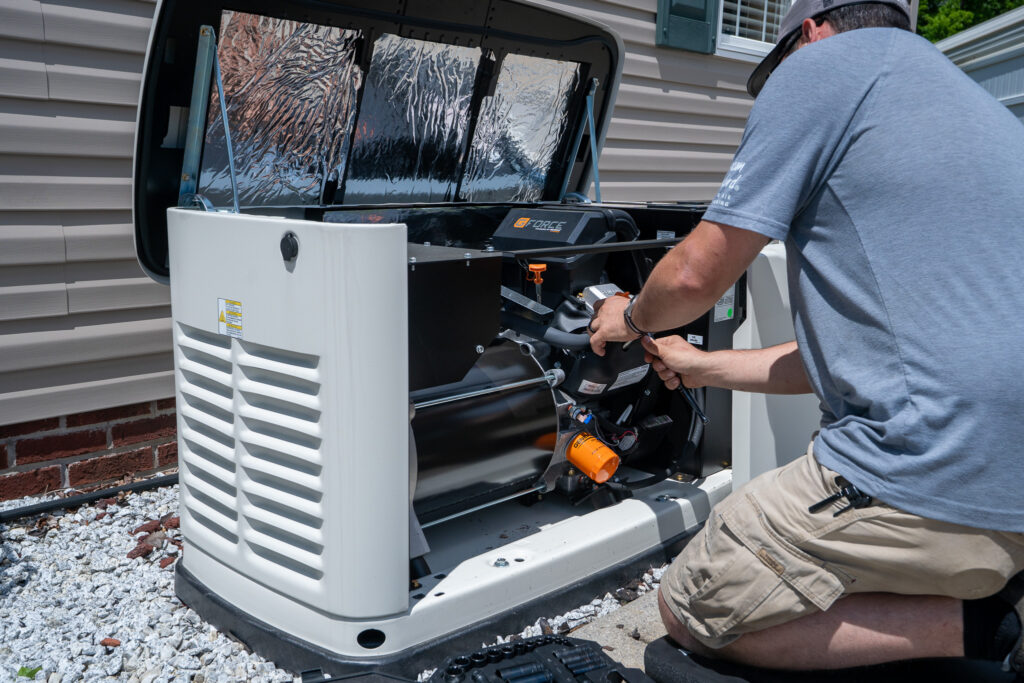
The mechanical side of a generator fall tune up starts with a visual inspection of the engine, mounts, and housing. Technicians look for oil leaks, loose bolts, cracked hoses, and corrosion around fittings. Belts get checked for glazing and proper tension; a worn belt can snap during a long outage and stop the whole unit. Air filters come out for cleaning or replacement, since a clogged filter starves the engine and causes rough running. Spark plugs are pulled and inspected on gas units, and gapped or replaced when they show wear.
Oil service is the next step in the mechanical portion of the tune up. Fresh oil protects internal engine parts from wear during long winter run cycles. The oil filter is swapped out at the same time to remove trapped metal shavings and combustion byproducts. Coolant-cooled generators get a check of the radiator, hoses, and antifreeze concentration to prevent winter freeze damage. Technicians also grease any fittings that require it based on the service manual.
The final mechanical check covers the exhaust system, engine mounts, and vibration isolators. A cracked exhaust pipe can leak carbon monoxide into attached structures, so this inspection matters for safety. Vibration dampers wear out over years of use and let the engine shake the frame, which loosens wiring and fuel lines. Technicians torque down loose hardware and replace any damaged isolators. A good mechanical inspection catches small problems before they grow into expensive repairs.

The Electrical Portion of a Generator Fall Tune Up
The electrical portion of a generator fall tune up begins with the starting battery. Batteries are the number one reason standby generators fail to start, and cold weather makes weak batteries worse. Technicians load-test the battery, clean corrosion from terminals, and check the charger output. A battery older than three years often gets flagged for replacement before winter. Cable connections are tightened to prevent voltage drop during startup.
Wiring and control board inspection come next during the electrical work. Rodents chew wires inside generator enclosures, especially in fall when they look for warm shelter. Technicians pull the control panel and check for chewed insulation, loose terminals, and burned contacts. The voltage regulator is tested to confirm it holds a steady output under changing loads. Error codes stored in the controller memory get reviewed and cleared after repairs.
The automatic transfer switch is the last major electrical item on the tune up list. This switch senses utility power loss and signals the generator to start, then transfers your home or business to generator power. Contacts inside the switch pit and burn over time from arcing. Technicians inspect the contacts, tighten lugs, and test the transfer timing. A slow or stuck transfer switch means the generator runs but your building stays dark, so this test matters. For a full generator maintenance visit, click here for our Generac generator maintenance service.
The Test Run Portion of a Generator Fall Tune Up
The test run portion of a generator fall tune up proves the unit will actually work during an outage. Technicians simulate a utility power loss and watch the full startup sequence. The generator should crank, fire, stabilize voltage and frequency, and accept the transfer switch load within seconds. Timing values get compared against factory specifications in the service manual. Any delays or hunting during startup point to a fuel, ignition, or governor problem.
Load testing is part of a thorough test run. The generator runs under real household or building load for several minutes to confirm it holds voltage and frequency. Technicians watch the output meters and listen for misfires, surging, or unusual vibration. Exhaust color gets checked, since black smoke points to a rich fuel mixture and blue smoke points to oil burning. A healthy generator runs clean, quiet, and steady under load.
The final test run step includes confirming the return-to-utility sequence. When simulated utility power returns, the transfer switch should move the load back and let the generator cool down before shutting off. This cooldown run protects the turbocharger on diesel units and lets engine temperatures stabilize. Technicians confirm the exercise timer is set correctly so the unit self-tests weekly through winter. A clean test run report gives you confidence the generator will start when the lights go out.

Common Problems Found During a Generator Fall Tune Up
A generator fall tune up often uncovers problems owners never noticed, because standby units sit quiet most of the year. Small issues grow into no-start failures when left alone through a hot summer and a cold winter. Catching these problems in fall gives time for repairs before the first ice storm. Most issues fall into a handful of common categories that technicians see year after year. Knowing what to expect helps you budget and plan for service.
Battery Problems Found During a Generator Fall Tune Up
Battery failure is the single most common problem found during a generator fall tune up. Standby generator batteries work hard; they sit on a trickle charge for months, then deliver heavy cranking current when called. Heat from summer shortens battery life, and cold from winter reduces cranking power. A battery that tested fine in spring can fail by November. Technicians carry testers that measure cold cranking amps and internal resistance to spot weak batteries.
Corrosion on battery terminals is another frequent find during fall service. White or green buildup on the posts and cable ends blocks current flow and causes slow cranking or no-start conditions. Technicians clean the terminals with a wire brush and apply protective grease to slow future corrosion. Loose cable clamps get tightened at the same time. A clean, tight battery connection makes a big difference in cold-weather starting.
Charger problems also show up during fall tune ups. The battery charger keeps the starting battery topped off between runs, and a failed charger leads to a dead battery within weeks. Technicians test the charger output voltage and confirm it matches factory specs. A weak or failed charger gets replaced before it strands the whole generator. Battery and charger service together form the foundation of reliable standby power through winter.
Fuel System Problems Found During a Generator Fall Tune Up
Fuel system problems are another common find during a generator fall tune up. Propane and natural gas units depend on steady fuel pressure, and low pressure causes hard starts, stalling, or low output. Technicians measure fuel pressure at the regulator and at the engine inlet with a manometer. Pressure outside the factory range points to a regulator, line, or meter problem. Fixing fuel supply issues often requires coordination with your propane or gas utility.
Diesel units have their own set of fall tune up fuel problems. Diesel fuel grows bacteria and absorbs water over long storage, especially in tanks that sit partly full. Technicians pull a fuel sample and check for cloudiness, sediment, and water. Contaminated fuel plugs filters and injectors, causing poor running or complete shutdown. Fuel polishing or tank cleaning may be recommended when contamination shows up.
Fuel filters are a standard replacement item during fall service. Clogged filters restrict flow and starve the engine under load, which shows up as sagging voltage or complete stalling. Technicians replace primary and secondary filters based on the service schedule. Fuel lines get inspected for cracks, leaks, and loose fittings at the same time. A clean fuel system keeps the generator running through the longest outages.
Rodent and Weather Damage Found During a Generator Fall Tune Up
Rodent damage is a surprisingly common problem uncovered during a generator fall tune up. Mice, squirrels, and chipmunks nest inside warm generator enclosures and chew through wiring insulation. Droppings and nesting material inside the cabinet create fire risk and block cooling airflow. Technicians clean out debris and seal entry points with hardware cloth or steel wool. Rodent damage caught early costs far less than a full wiring harness replacement.
Weather damage also shows up during fall inspections. Summer sun cracks rubber components, fades paint, and degrades gaskets around the enclosure. Wind-driven rain sometimes finds its way past worn door seals and soaks the control panel. Technicians check gaskets, hinges, and latches for proper seal and replace worn parts. A tight enclosure keeps moisture and pests out through winter.
Corrosion on the generator frame and components is the last common weather-related finding. Salt from nearby roads and mineral-heavy rainwater eat into steel frames, exhaust pipes, and electrical grounds. Technicians wire-brush rust spots, touch up paint, and clean ground connections to bare metal. A grounded generator runs safer and produces cleaner power. Need repair work after a rough finding? Click here for our Generac generator repair service.
Why You Need a Professional Generator Fall Tune Up Before Winter
Southwest Virginia winters bring ice storms, high winds, and extended outages that test every standby generator in the region. A professional generator fall tune up is the best insurance against a no-start failure during a storm. DIY service often misses critical checks like transfer switch timing and fuel pressure measurement. Licensed technicians carry the tools, parts, and training to catch problems homeowners can not see. Booking service in fall also beats the rush that comes after the first big outage.
The Safety Benefits of a Professional Generator Fall Tune Up
A professional generator fall tune up protects your family and property through the winter season. Carbon monoxide leaks from cracked exhaust systems can enter attached garages or basements and cause serious harm. Technicians inspect exhaust routing and seals at every service visit. Proper clearances around the unit get verified so hot exhaust does not ignite leaves or siding. Safety checks like these keep small issues from turning into disasters.
Electrical safety is another reason professional service matters. A miswired transfer switch can backfeed utility lines and electrocute linemen working to restore power. Technicians confirm the switch isolates your building from the grid during generator operation. Grounding connections get tested for proper resistance and tight contact. A safe electrical setup protects everyone from your family to the utility crews down the road.
Fuel safety rounds out the professional inspection benefits. Propane and natural gas leaks at generator connections create explosion risk, and technicians use electronic leak detectors to find even small leaks. Diesel fuel leaks create fire risk and soil contamination. Every fuel fitting, hose, and tank connection gets a visual and instrument check during the tune up. Safe fuel handling keeps your property and family protected.
The Reliability Benefits of a Professional Generator Fall Tune Up
Reliability is the main reason most owners schedule a generator fall tune up. A standby generator that fails to start during an ice storm leaves your home without heat, water, or refrigeration. Professional service catches the small problems that cause most no-start failures. Battery, fuel, and control system issues get addressed before they strand you in the dark. A tuned generator starts on the first try, every time.
Run-time reliability matters as much as starting reliability. A generator that starts but stalls after an hour is almost as bad as one that never starts. Professional load testing confirms the unit can run for days under full building load. Fuel supply, cooling, and lubrication all get verified during extended test runs. Long-outage reliability gives peace of mind during multi-day winter storms.
Warranty protection is the last reliability benefit. Generac and other manufacturers require documented professional service to keep warranties active. DIY service or skipped intervals often void coverage on major components. Professional service records give you full warranty protection if a part fails. Protecting the warranty protects your investment in the generator itself.
Why Choose SWVA Mechanical for Your Generator Fall Tune Up
SWVA Mechanical brings decades of industry knowledge to every generator fall tune up in Southwest Virginia. Our technicians are licensed, certified, background checked, and drug tested for your peace of mind. We service Generac units across Lebanon, Abingdon, Bristol, Tazewell, Wise, and the surrounding towns. Prompt scheduling and honest pricing make us a trusted choice for homeowners and businesses across the region. We stand behind every tune up with clear service records and straightforward communication.
Our team carries the parts, tools, and test equipment needed to complete most tune ups in a single visit. We service residential and commercial standby units of all sizes, from small home backup systems to large light commercial installations. Financing through Wisetack and Synchrony makes larger repairs affordable when problems turn up during service. As a locally owned and operated small business, we treat every customer like a neighbor. Our work protects your home, family, and business through every storm.
Ready to book your generator fall tune up before the first winter storm? Call SWVA Mechanical at (276) 971-9514 or email Brian@swvamechanical.com to get on the schedule. New to standby power and wondering about installation? Click here for our Generac generator installation service. We handle the full lifecycle of your generator from installation through maintenance and repair, so you always have reliable backup power when the lights go out.